Showing posts with label Comedy. Show all posts

Tuesday, September 3, 2013

Rhoda : "Rhoda's Wedding"

Season 1, Episode 8
Original Airdate: October 28,1974
Writers: Norman Barasch, James L. Brooks, Allan Burns, David Davis, Carroll Moore, David Lloyd, Lorenzo Music
Director: Robert Moore
Producers: David Davis, Lorenzo Music
Cast: Valerie Harper, David Groh, Julie Kavner

Before it became a model for what not to do with a successful sitcom, the first season of “Rhoda” was pure magic. The character, who became a fan favorite on “The Mary Tyler Moore Show” was being spun off into her own sitcom. But instead of just providing viewers with a watered-down version of its sister sitcom (sexy single woman tries to balance dating and a professional career), “Rhoda” was a family affair, centering on the title character’s quirky relatives while also pairing her off in a romance with Joe, a really great New Yorker who she would quickly fall for. The writing was incredibly crisp and Rhoda lost none of her edge in the transition between second banana and leading lady.

The first season featured a fantastic opening, with Rhoda (Valerie Harper) speaking to the camera, confessional style. In just a few seconds we know our main character (“I had a bad puberty. It lasted seventeen years”), know her family (“I decided to move out of the house when I was 24. My mother still refers to this as the time I ran away from home.”) and know the show we are about to watch (“Now I’m back in Manhattan. New York, this is your last chance”). Seriously, whoever made this intro deserved an Emmy.

Rhoda and Joe’s courtship (quickly) blossomed into an engagement, which resulted in this episode, the best crossover in the history of television. Most of the cast from “The Mary Tyler Moore” show came from Minneapolis to New York City for Rhoda’s vows, and the results are sitcom magic. So much could (and more often than not, does) go wrong when two world collide like this. Would the different humor styles of the shows match? Would the cast of “Mary” overwhelm the newer cast of “Rhoda”? Or would the cast of “Mary” be so marginalized that viewers would be annoyed at their inclusion at all? Somehow, the episode’s multitude of writers strike the perfect balance between the worlds, creating a beautifully written hour of television that manages to pay homage to all Rhoda’s history on “Mary” while still being an enjoyable episode of her own sitcom. It’s all so good that you can actually forgive the two minutes of clips that appear around the halfway point.

This wonderful balance certainly comes in part from the fact that this is a special hour-long installment. The added running time gave the writers additional scenes where Rhoda can interact with everyone important in the cast. There is a fantastically funny scene where Rhoda and her sister Brenda (Julie Kavner) slowly, horrifyingly, realize that their mother (Nancy Walker) has ignored her daughter’s wishes of a small intimate ceremony and invited over 70 people. The way Walker balances breaking the news to Rhoda while remaining in control of the situation is superb, something that would recur wonderfully over the show’s first two seasons.

The crew from “The Mary Tyler Moore Show” arrives, including Phyllis (Cloris Leachman), who hates Rhoda but is determined to prove that she doesn’t by going to the wedding despite not being invited. At this point we expect that the slew of guest stars (Moore, Leachman, Ed Asner, Georgia Engel, Gavin MacLeod) to take over the proceedings, but instead the writers still allow for a barnburner of a scene between Rhoda and Joe the night before the wedding. You don’t expect the scene, but once you see it you cannot imagine the episode without it -- there’s a sweet emotional honesty between the characters that you would never expect on a sitcom. There are a few punchlines, but they are almost beside the point. The moment is about Rhoda laying herself bare in front of Joe, presenting herself as the imperfect individual she is and allowing Joe to embrace her for those imperfections. It’s sweet, makes you root for the couple and anchors an episode that might have easily embraced too much hype for its own good.

What comes next is truly one of the funniest sustained sequences in all of television. Abandoned in her apartment by Phyllis (because of course Phyllis forgot to pick her up), Rhoda crosses Manhattan and heads to the Bronx...all while wearing her wedding dress. First she’s on the subway but must walk the last half mile herself. These hilarious sight gags (shot on location) are made even funnier by the intercutting with the waiting guests. Phyllis arrives at the ceremony just long enough before Rhoda to get her life threatened by Rhoda’s mother and make the moment all about her, begging for forgiveness and getting none from anyone but Georgette, who warns Phyllis that she better get the heck out of there before Rhoda arrives. It’s perhaps the crowning comedic achievement in the entire franchise (“The Mary Tyler Moore Show,” “Rhoda,” and “Phyllis.” The dramatic “Lou Grant” doesn’t really count), rivaling even Chuckles’ funeral, Phyllis slamming the oven door and the group hug. Of course Rhoda gets there and gets her happy ending. It was the happy ending we rooted for. The happy ending Rhoda deserved. And it was all very, very funny.

Until, of course, it wasn’t.

In “Rhoda’s” third season the writers made the abhorrent decision to separate Rhoda and Joe before they ultimately got a divorce. Why? Apparently nothing spells “comedy” more than the slow meltdown of a marriage audiences loved. To make matters even worse, Walker and Harold Gould (Rhoda’s father) were written out, making the familial unit that felt so honest in the series nonexistent. Harper got tan, lost weight and got an entirely new wardrobe toshow off her body. She struggled with dating and juggling that life with her job, all while confiding in her sister/best friend, who was unlucky in love. In other words, “Rhoda” became a watered-down clone of “The Mary Tyler Moore Show,” something the first season celebrated being so different from. Viewers abandoned it like they would the Titanic, and the show was cancelled by the middle of its fifth season, with four episodes never even aired. Such a shame that a show this good could have dissolved into something that predictable and bland, because it has damaged the legacy of the show, whose first season should be ranked among the best written, performed sitcoms in history.

“Rhoda’s Wedding” is available on HuluPlus and DVD.

Monday, March 4, 2013

The Comeback - "Valerie Shines Under Stress"


Season 1, Episode 12
Original Airdate: August 28. 2005
Writer: Heather Morgan
Director: David Steinberg
Executive Producers: Michael Patrick King, Lisa Kudrow, Dan Bucatinsky, John P. Melfi
Cast: Lisa Kudrow, Robert Michael Morris, Lance Barber

It had been a few years since I had seen “The Comeback” when I decided to revisit it for this article, and after only a few seconds I found myself dropped back into the world of all things Valerie Cherish. The characters all seemed so familiar and so beloved, and the world that co-creators Michael Patrick King and Lisa Kudrow created was completely three-dimensional and real. This is truly one of the greatest of all television shows.

The premise involves a show within a show within a show, and yet still manages to seem simple and fresh (even today). Valerie Cherish (Kudrow) is a C-list actress who concurrently lands a dowdy supporting role on an unfunny sitcom called “Room and Bored” and a reality show that aims to follow Cherish on her “comeback” to television. The show presents raw, unedited footage of Cherish, her family, her friends, the reality crew and those working on the sitcom. It came out around the same time as the American version of “The Office” and employed that same documentary style that became so prevalent over the past eight years, but because “The Comeback” embraced the meta aspects of the style and used the crew as characters (something “The Office” is just now beginning to do, here in its final season), it created another level of humor to its storytelling.

The world that King and Kudrow created was quite ingenious on many levels. While it poked fun at the three-camera sitcom Valerie worked on (a three-camera sitcom is where the audience watches the show taped live and laughs at all the gags), it employed its own skewed version by having “normal people” watching the reality show taping and reacting to all of Valerie’s gags and pratfalls. And that cast of characters! Dickens would be proud. I’m continually fascinated by the depth that King and Kudrow brought to (at first glance) shallow caricatures. The star of “Room and Bored,” Juna (Malik Akerman), is a none-too-bright blonde actress…and yet the writers continually make a point of humanizing her. She really does consider Valerie (who befriended her in order to seem more hip) to be one of her best friends.

And then there’s Valerie.

On one level, the audience never sees who Valerie Cherish really is (until the finale) because she always has a mask up for the cameras. On another level, the cracks in her “onscreen” persona humanize her and her inability to let any of the many (many!) embarrassments she suffers through bring her down make us cheer for her. We love her, but we also love to see her suffer.

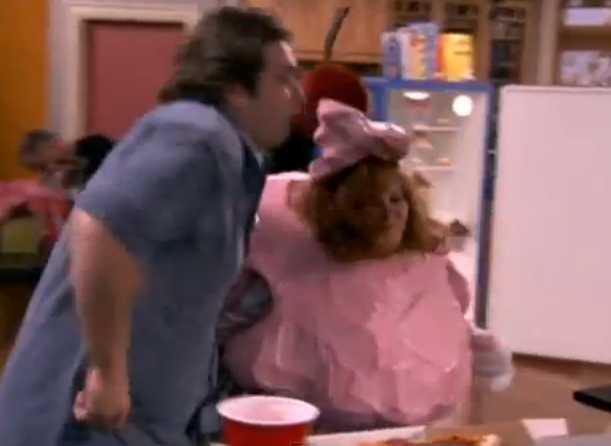
“Valerie Shines Under Stress” presents us with a world where all of Valerie’s comforts and safety nets are taken away from her. With “The Comeback” reality show premiering soon, its in her contract that she must be featured heavily in an episode of “Room and Bored,” something her arch-nemesis (and co-head writer of the sitcom) Paulie G (Lance Barber) is none-too-happy with. The writers devise a diet-pill induced dream for Valerie’s character – her character dressed as a giant cupcake must perform a big pratfall. During all this, Juna begins getting death threats and security is bumped up on set, and after Valerie beeps while walking through a metal detector she reveals that she has scoliosis and, as a result, has a large metal rod in her back.

All during this, writer Heather Morgan begins setting up the dominoes that she will knock down during the episode’s climax. “Room and Bored’s” other head writer, Tom (Robert Bagnell) has an “ulcer situation” and spends the week at home. The sitcom’s director for the week is a non-presence. Valerie insists that her husband doesn’t come to the taping. She goes to get advice from a director she trusts (James Burrows, one of the great comedic television directors of all time playing himself), who tells her that falling backward will be funnier, even though we know that will really hurt her because of the rod in her back. On taping day, the audience leaves early after a technical malfunction…the last safety net for Valerie.

All she has left is Paulie G’s emotionless stare.

In an incredibly uncomfortable sequence (purposely), Valerie falls in the cupcake suit over and over…finally falling backward, fully knowing she will be in incredible pain afterwards. Who would have ever thought a giant cupcake suit would be such a dramatic prop? After all is said and done, Paulie G insults Valerie one too many time, and Valerie punches him in the gut. Causing him to vomit. Which causes her to vomit. And, in that moment, all the tension that has been building for the entire episode comes to a beautiful, hilarious climax. Because, seriously, who doesn’t love (in the words of Jay Leno) “the rare double vomit”?

What really impressed me was how well Morgan was able to hide the script’s machinations. Every piece of the puzzle was enjoyable enough on its own that it did not seem like set-up, which is the hallmark of great writing.

The series was, in many ways, lightning in a bottle. On every level, from the writing to the cast to the direction, it worked. And that is some kind of special. Of course, “The Comeback” was never planned as a one-season wonder. Though the finale works perfectly as a series finale, when Kudrow came to speak at AFI she spoke at length about what would have happened had the series come back for a second season. Even on the DVD there are extra scenes shot that I can only imagine would have been used if the show came back. Even though I’m heartbroken HBO didn’t give the show a second chance, part of me thinks that it would be nearly impossible to top the first season. Of course, even as I write that, I know that if anyone could do it, it would be Kudrow and King. The character still remains so indelible that I can’t help but wonder where she would be today. What would Valerie Cherish be doing right now? I do wanna see that.

“Valerie Shines Under Stress” is available at HBO Go, YouTube and on DVD.

Monday, February 11, 2013

Arrested Development - "Meat the Veals"


Season 2, Episode 16
Original Airdate: April 3, 2005
Writers: Richard Rosenstock, Barbie Adler
Director: Joe Russo
Executive Producers: Brian Grazer, Ron Howard, Mitchell Hurwitz, David Nevins
Cast: Jason Bateman, Portia de Rossi, Will Arnett, Tony Hale

Telling a single funny joke is infinitely more difficult than telling a single unfunny one, and filling 22 minutes with funny jokes is nearly impossible, no matter what a laughing studio audience would have you believe. “Meat the Veals” is as close to a perfect comedic episode of television I’ve ever seen. Every single joke is funny, and every time I watch the episode I am as entertained as I was the first time. And yes, I write this fully acknowledging that the title is horrible. For me, it’s the pinnacle of “Arrested Development,” a show with many creative peaks.

Plus, there’s Mrs. Featherbottom.

Plus, we’re introduced to Franklin the puppet.

Though now it seems like everyone knows and loves the show (and likes to boast that they watched it when it was originally on air. As if.), the series was an underground movement from the start…the type of program that four hipsters in Brooklyn watched but were afraid to tell others about because it would mean admitting they had a television. Even I, the guy who watched all three episodes of “The Return of Jezebel James,” didn’t start watching until the beginning of the second season. And, truthfully, it’s easy to see why its many eccentricities turned off new viewers. Instead of self-contained, simple A-and-B stories, any given episode had about ten continuing storylines going on. Instead of giving viewers easy jumping-on points for prospective viewers, it filled its half-hours with dozens of in-jokes new viewers would not understand. This craziness is what makes the show great, of course – and are a huge reason why it has flourished on DVD and Netflix (where viewers can watch from episode one and not miss a beat). But for the show’s original audience, the inside-baseball gags were just another reason we loved it. It was like we were part of an elite club that most of the world was not privy to.

Of course being part of a small, elite club watching a broadcast sitcom doesn’t guarantee it’ll have a long and successful run, but that’s beside the point.

The main story of “Meat the Veals” (let me reiterate how much better the episode is than its name suggests) involves George Michael (Michael Cera), to his father Michael’s (Jason Bateman) chagrin, wanting to get pre-engaged to his girlfriend Anne (Mae Whitman). Meanwhile, Oscar (Jeffrey Tambor) wants to throw an anniversary party for his missing twin brother (Tambor again) and Lucille (Jessica Walter). Meanwhile, Tobias (David Cross) has been thrown out of the house by Lindsay (Portia de Rossi) and, in order to see his daughter Maeby (Alia Shawkat), dons the persona of a British housekeeper named Mrs. Featherbottom. Meanwhile, Maeby tries to keep her dual life as a studio exec hidden from her family. Meanwhile, GOB (Will Arnett) wants to re-introduce the family to Franklin, a racist black puppet that mocks George Michael’s “cracker ass,” among other non-bleeped things. Like I said, it’s a little complex for a half-hour sitcom. But then again, half the fun is watching the multiple storylines crash into one another in ways much cooler than “Crash.”

Like I wrote, every single joke lands. Also, this happens, which is my favorite bit of physical television comedy in the past decade. I can’t watch the episode without rewinding Mrs. Featherbottom’s fall multiple times. It’s difficult to pick a favorite bit of dialogue…maybe this one?

Lindsay (re: Mrs. Featherbottom): “You do realize that’s Tobias, right?”Lucille: “If he’s going to get into my closet, he’s going to work for it.”
Or this one?
Mrs. Featherbottom: “Who’s up for a banger in the mouth?”
I’d mention more, but then I’d just start listing, which is only fun if it involves Roger Ebert quotes.

What struck me during this viewing is how varied the actors’ different styles of comedy are. In series like “Fraiser,” and “The Dick Van Dyke Show,” every actor seems to be hitting the same comedic notes in any given episode. Often when a different comedic style is introduced on sitcoms, a’la Urkel on “Family Matters” or Fonzie in “Happy Days,” they tend to take over the show and shift the comedy to their strengths. I don’t write that as a criticism of those shows, just an observation in order to underline how special it is that “Arrested Development” can marry all those brands of humor into one cohesive whole. Cera’s quiet, awkward humor couldn’t be further removed from Cross’ broad slapstick, and yet when they are in the same room together, it feels right.

This leads me to the question of whether this is the best comedic ensemble in television history. Surely the casts of shows like “I Love Lucy,” “Seinfeld” and “The Mary Tyler Moore Show” were, in their own ways, perfect…but this cast is also perfect. And bigger. And while those sitcoms ostensibly had the title star at their center, here there is no true lead. Yes, Michael is our way into the show, but in many ways he’s just as demented as the rest of his family (it’s just not as obvious) – and just because you play the straight man in a comedy sketch does not mean you are central to it. So yeah, as to the question posed above, I’ll call this troupe the once-in-a-lifetime, lightning-in-a-bottle, other-cliché-chesnut, best cast in the history of television.

And I’m so happy that “Arrested Development” has crossed over garnered the popularity it always deserved. I remember being in college when I discovered it, and putting on DVDs of the first season for my friends while we were eating Papa Johns and whipped ice cream. In a way, helping others discover the program and the greatness contained therein was part of the fun – like handing a great novel to someone and whispering “you’ll thank me later.”

“Meat the Veals” is available on DVD, Netflix, Amazon Prime, iTunes and Hulu. And now, seven years after the show was cancelled midseason by Fox, it has been revived by Netflix. The fourth season will be available in May.

Monday, January 28, 2013

Route 66 – “Lizard’s Leg and Owlet’s Wing”


Season 3, Episode 6
Original Airdate: October 26, 1962
Writer: Stirling Silliphant
Director: Robert Gist
Producer: Mort Abrahams, Leo Davis
Cast: Martin Milner, George Maharis, Boris Karloff, Peter Lorre, Lon Chaney Jr.

“Lizard’s Leg and Owlet’s Wing” is a fantastic, wrapped present to fans of 1930s and 1940s horror classics. I hesitated for a while to write up an article about this episode because I don’t really think that it fits the definition of “great television” in the way the other shows I have written about here do. The writing here isn’t the best and it’s tonally different than the other “Route 66” installments I’ve seen. But that’s before you insert what I like to call the “awesomeness” factor at play here. I’m just a tad obsessed with those old classic horror movies I mentioned earlier, so to get to see Boris Karloff, Peter Lorre and Lon Chaney Jr. not only interact with one another, but don some of the most iconic film make-up of all time makes me happy in ways I can’t begin to articulate.

The episode opens with a young boy asleep in his bed when what appears to be a hunchback walks in. Turns out it’s just Lon Chaney Jr. (“The Wolf Man” himself, “The Son of Dracula”) wanting to tuck his grandson in, and he’s wearing his father’s get-up from the silent version of “The Hunchback of Notre Dame.” At this point I checked my DVR to make sure this was really “Route 66” and it told me it was. Then we cut to a three-way phone conversation between Chaney, Peter Lorre (perhaps history’s greatest character actor, but know for golden age of horror roles like “Mad Love”) and (cue the Angel chorus) Boris Karloff (“Frankenstein,” “Bride of Frankenstein,” “The Mummy,” “The Old Dark House,” “The Black Cat,” “Isle of the Dead” and so many others, but most horrifyingly the “Mr. Wong, Detective” series for Monogram). At this point I figured I must have accidentally DVR’ed the wrong show.  This must have been writer Stirling Silliphant’s idea for a tricky, surprising teaser, and fifty years later it still works like a charm. In fact, this type of fake-out teaser has been copied many times since in horror series – just think of the “Humbug” episode of “The X-Files.”

The plotlines for the episode are light as a feather and done with an ample amount of good dialogue. Tod (Martin Milner) and Buzz (George Maharis) get a gig at a fancy hotel outside Chicago. Karloff, Chaney and Lorre (playing themselves) have come to discuss a possible television series they would star in and argue about whether they should stick to the old ways (Universal horror) or go the new route (Hammer horror), and Tod must act as their liaison to the hotel…or something. Buzz is in charge of a women’s lib convention and immediately falls head over heels with one of the secretaries there, who is depressed after her boss left her for his fiancé. Seriously. Though the A and B stories couldn’t seem more dissimilar, Silliphant finds ingenious crossovers between them. To prove the old scares are still viable, Chaney dresses up in Wolf Man garb and causes every woman in sight to faint in horror, and Karloff has a surprisingly sweet scene with the depressed secretary where he gives her love advice.

The real attraction here is getting to see the three legends interact with one another, with “the normal people” and dress up as the old favorites. Also, a quick shout-out to Lorre’s suitcase, which is alligator skin, has an actual alligator head as its handle (I’m not kidding) and almost steals the show. It’s always a thrill to see Karloff play a nice guy since his image is so synonymous with grotesquery, and here, playing a version of himself, he has a surprising amount of comedic timing, landing every punchline thrown at him. Lorre had long perfected his depressed-annoyed persona and seems to be having a horrible (meaning wonderful) time onscreen. Chaney is rarely out of make-up here, but I’m sad to report that when he is, he looks absolutely miserable. He can barely land any line other than grunting and seems to have trouble doing, well, anything. I have no idea whether it was his rumored alcoholism or what, but someone definitely needed to give him a Red Bull or something.

Chaney does do a decent job seeming very tortured while dressed up as the aforementioned Hunchback, the Mummy (though Karloff originated the role, Chaney played it in one of the sequels) and, of course, the Wolf Man. I got goosebumps when I saw Karloff in full-on make-up as Frankenstein’s monster, and how can you not? Since “Mad Love” was an MGM vehicle, Lorre must do his best with an evening jacket and evil glare. What makes it even more exciting is that it is the classic Jack Pierce make-up and not some second-rate knockoff.

It’s odd that I’ve come this far in the article with barely a mention of the two main characters, but they are ancillary to the episode at best. Maharis does a good job at being handsome (harder than it seems, I’m told) and has a neat little bit of physical comedy involving a pool. Milner interacts with the horror stars the most, but does the smartest thing possible here: He gets out of their way. The dialogue between the guys is smooth and well-written, and though they both are excellent actors who showcase their talents in other episodes, this isn’t one of them.

Silliphant was a co-creator of “Route 66” and also a show called “Naked City,” which I’m looking forward to sampling soon. Looking at his IMDB page, the diversity of his work and his output is almost staggering. This man wrote for “The Mickey Mouse Club,” “Alfred Hitchcock Presents” and also penned the features “Village of the Damned” and “The Towering Inferno.” In what universe are those works related? Oh, and he was BFF’s with Bruce Lee! This is a writer I need to know more about, and pronto.

I love road trips. When I moved out to Los Angeles to attend the AFI Conservatory, I decided to try and travel down Route 66. I quickly found out that most of the highway is either very out of shape or just gone now, abandoned or paved over by the freeway. It’s a sad state of affairs when gas station attendants don’t actually know that their station is located on Route 66. And yet that time traveling out west remains one I will always remember fondly. I’ll always wonder what that highway, what that world, was like in its heyday, and feel lucky to get a little picture of what it might have been through this series.

“Lizard’s Leg and Owlet’s Wing” is available on DVD and YouTube.

Friday, December 21, 2012

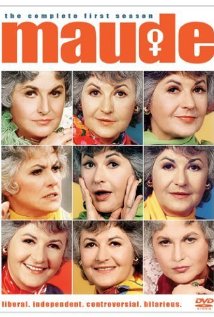
Maude - "Maude's Guilt Trip"

Season 6, Episode 1
Original Airdate: September 12, 1977
Writer: Charlie Hauck
Director: Hal Cooper
Executive Producers: Hal Cooper, Rod Parker
Cast: Bea Arthur, Bill Macy, Adrienne Barbeau, Rue McClanahan

People don’t talk much about “Maude” anymore, do they? Though well-liked throughout most of its run, in recent years its popularity has been eclipsed by the show it spun out of (“All in the Family”) and star Bea Arthur’s other iconic comedy (“The Golden Girls”). And what a shame that is, because for my money “Maude” is better * gasp! * than both of those sitcoms.

The show centers on Maude Findlay (Arthur), Liberal with a capital “L” and currently married to her fourth husband Walter (Bill Macy). While “All in the Family” mocked its bigoted hero Archie Bunker while simultaneously humanizing him through his faults, “Maude” had a more interesting trick to play: Maude considered herself one of the educated, cultural elite who was consistently faced with the foibles of everyday life, tried to rise above it, but (usually) ended up surrendering to her more base emotions. As an audience, we see parts of ourselves in Archie, sure, but I see a lot more of myself in Maude. A similar version of this would be used to huge success first with Sam in “Cheers” and later with Fraiser in his self-titled spin-off.

The show also took one hell of a lot of risks, more than probably any other in history. Even if you’ve never seen the show, you’ve probably heard about the infamous abortion episode, which unfortunately doesn’t hold up today. But there is so much more. At some point every major character abused prescription drugs. An entire episode focused on Maude trying to buy a bag of pot. Walter became an raging alcoholic who slapped Maude onscreen. Later he went bankrupt and attempted suicide. Maude struggled with what, in retrospect, appears to be bipolar disorder. In one episode Maude hired a black maid (Ester Rolle, who spun her Florida character off into “Good Times”) because she had white man’s guilt. And in a fantastic tour-de-force, Arthur performed a one-woman-show for an entire episode as her character quietly came apart at the seams in a therapy session. You simply can’t get away with stuff like this today, even though for my money sitcoms would be served well to be a lot more topical and risk-taking. Oh, and I should note that, even though the above events are really “heavy” in content, the show still managed to be really damn funny, even in its darkest moments.

“Maude’s Guilt Trip” is, for me, the high point of the entire series, and shows all its characters reacting to the “death” of a most hated relative. Everything action, reaction and line of dialogue showcases moral ambiguity taken to most hilarious extremes.

The episode begins with Maude preparing for the arrival of her loathed Aunt Tinky (“Her tea kettle doesn’t whistle, it whines”). Maude has bought her a plane ticket on a crappy puddle-jumper, but her mind is focused on wanting to take a trip to Rome. As a way to make Maude feel guilty, Tinky purchases $50,000 worth of life insurance in Maude’s name before she gets on the plane…and then the plane crashes.

Arthur’s performance throughout the episode is tremendous, a perfect balance between the meaningful words coming out of Maude’s mouth and the dollar signs spinning in her eyes. All Maude really cares about is getting the best trip to Rome possible, but she must go through the motions of seeming upset that this horrible person is dead, especially in front of her daughter (Adrienne Barbeau) and best friend Vivian (Rue McClanahan. Yes, THAT RueMcClanahan. Seriously, you should be watching this show).

Here’s a little sample of how brilliantly writer Charlie Hauck toes the line between humanity and selfishness:

Maude: “We could make (the trip to Rome) a pilgrimage in Tinky’s honor.”
Vivian: “Was she Catholic?”
Maude: “What the hell is the difference?”

Just as Maude finally makes peace with her “emotional reaction” to Tinky’s death and begins to behave normally again, Hauck pulls the rug out from under the characters in a brilliantly executed twist: Vivian’s husband Arthur (Conrad Bain) arrives with the news that there is a lone survivor who has crawled out of the rubble and is fighting for survival in the woods where the plane crashed.

The thought that Tinky might be alive becomes secondary to the thought that the trip to Rome is now in question, even though Maude tries to pretend that her priorities are just the reverse. She desperately attempts to keep the moral high ground even though there is none to stand on, and even though no one around her is really judging her. Watching Arthur spiral out of emotional control is one of the great joys in all of comedic television, and her meltdown here is one for the ages.

Then there’s yet another twist, one I’ll let you discover for yourself, since I’m pretty sure you haven’t watched the episode. It’s worth noting that this is the first episode of the show’s sixth and final season, and to see the sitcom still firing on all cylinders this late in its run is wonderful. Despite the heavy writer turnover throughout “Maude’s” run (like many sitcoms of its time), the show was consistently good, often great, and allowed its characters to learn from their mistakes and stumbles – a rarity in a genre where keeping things status quo is the norm.

All this, and yet only the first season of “Maude” is available on DVD, and there don’t appear to be any announcements of the other seasons forthcoming. Such a shame, because this show feels perhaps even more timely and button-pressing today than it did when it first aired. Arthur remains a treasure, and fans of “The Golden Girls” would adore this sitcom because the characters are so similar. Here is a show that still has something to say to modern audiences, and yet that audience is having one hell of a time finding it.

“Maude’s Guilt Trip” is only available on YouTube.

Monday, October 29, 2012

Studio 60 on the Sunset Strip - "Pilot"


Season 1, Episode 1
Original Airdate: September 18, 2006
Writer: Aaron Sorkin
Director: Thomas Schlamme
Executive Producers: Thomas Schlamme, Aaron Sorkin
Cast: Matthew Perry, Bradley Whitford, Amanda Peet

The teaser of the first episode of “Studio 60 on the Sunset Strip” feels like a sledgehammer to the chest. It’s one of the most powerful, impactful openings of any series, and possibly the best. Writer Aaron Sorkin and director Thomas Schlamme were obviously inspired by the classic film “Network” (and say as much later in the show), but for my money this sequence transcends the movie. It’s so awesome, in fact, that the good will it builds allows Sorkin to take some major chances with structure and character development throughout the remainder of the episode.

The show focuses on the Los Angeles equivalent of “Saturday Night Live,” a live sketch-comedy show called “Studio 60.” Exposition is set up beautifully in the first few seconds as show cast member Simon Stiles (D.L. Hughley) informs the studio audience (and, by proxy, the viewers) about the history of “Studio 60,” the studio and how live television works. But then we begin to realize that the show is past its heyday, and the thousands of small stresses and sacrifices creator/head writer Wes Mendell (Judd Hirsch) has made finally cause him to have a nervous breakdown. By walking out on set. Live on air. And going into a rant about the slow disintegration and bastardization of the television industry.

That is all great, but what takes the sequence to another level is that we cut between the rant and the show’s director, Cal (Timothy Busfield) making the decision to keep Wes on air as long as possible, despite network executives screaming at him some variation on “you’ll never work in this town again!” Both threads are equally gripping, but the back-and-forth editing perfectly showcases the escalating chaos, climaxing with a smash to the show’s intertitle at the moment Cal finally gives in and cuts away from Wes, leaving the viewer gasping for air. Now that’s how you cut to commercial.

From here on in, Sorkin begins to play with the structure of most television pilots. The two main characters, Matt (Matthew Perry) and Danny (Bradley Whitford) don’t even appear until 20 minutes in. Instead, Sorkin uses the time immediately following “the event” to focus on new network executive Jordan McDeere (Amanda Peet) as she deals with the fallout on her first day of work (technically she doesn’t even have to start work until the following Monday, but decides “what the hell?”) and butts heads with another executive, wonderfully played by Steven Weber.

Jordan, along with Peet’s interpretation of the character, is one of the most fascinating, refreshing parts of the series. Peet was attacked by many critics for her “romantic-comedy” take on the roll, but I think that criticism is woefully misguided. The easy route would have been for Sorkin and Schlamme to cast an uptight “bitch” type for the role, but instead they did something much more interesting: They cast Peet against type and had her just act like a smart, normal woman doing her best in a bad situation. Instead of dealing with the dozens of lesser executives all looking at the mess on a micro level she sees the macro version of the problem. She doesn’t want to keep plugging the dam, she wants to build an entirely new one, and goes out of her way to accomplish that by being honest and forthright, two values none of the other characters seem to believe or, hell, can even comprehend in the television industry. When she tells Danny she knows he had cocaine in his system, he immediately believes she’s trying to blackmail him when that couldn’t be further from the truth. Whoops. Because she’s so forthcoming and honest, I’m guessing that’s why critics’ gut was that Jordan was underwritten, when it couldn’t be further from the truth.

Sorkin’s writing throughout is sharp, and his script never talks down to the audience. When there might be exposition that goes over our heads, he finds ingenious ways to make it come through without seeming like exposition, like Simon’s aforementioned introduction to the audience. His now-famous Walk-and-Talks conversations remain a thing of beauty, and many of his recurring storytelling tics pop up again here and are used well.

Many of his storytelling techniques bleed freely from one series to another. Turn on any Sorkin show and you’ll be likely to find two soul mates working in the same place who just can’t quite admit to themselves that they love one another (Casey and Dana on “Sports Night,” Will and Mac in “The Newsroom,” Matt and Harriet here). There’s usually an evil boss character who we later learn isn’t all that bad (Weber here, Jane Fonda on “The Newsroom,” William H. Macy on “Sports Night”) and loads of conservative characters (Will on “The Newsroom,” Harriet here) who serve as soapboxes to preach or be preached to. Oh, and he borrowed the opening nervous breakdown from “Studio 60” for the opening of “The Newsroom.” I mention these not as criticisms, but as observations. He goes back to these watering holes because they usually work well and he manages to find fun variations each time he does it.

Another thing Sorkin often gets criticized for is the lack of realism in his shows, which I find ridiculous. Just because his shows use real-life news events and politics as the backdrop for the storytelling does not mean that they must be gritty and real. Look at the pilot to “Studio 60,” where anchors on every cable news channel not only mention that the rant came from “Network,” but name check its writer, Paddy Chayefsky. As a screenwriter, it’s nice to think that might happen, but seriously? In what world? And his characters, despite speaking eloquently about politics, owe much more to the screwball comedies of the ‘30s and ‘40s (“Bringing Up Baby,” “His Girl Friday”) than reality. And, no offense to the gritty/shaky-cam/dark/topical/whatever shows, that’s the way I like it. If I’m being preached to, I want some escapism and I want some hope.

Over the course of its 45 minute pilot, “Studio 60 on the Sunset Strip” manages to create an entire world, populate it with a diverse, multi-dimensional cast and then topped it all off with a Queen song for good measure. It remains one of the most literate, engaging hours of television I’ve had the pleasure of watching. Screw what the critics say.

The pilot of “Studio 60 on the Sunset Strip” is available on the Complete Series DVD, Amazon Instant Video and iTunes.