Showing posts with label Multicam Sitcom. Show all posts

Tuesday, September 3, 2013

Rhoda : "Rhoda's Wedding"

Season 1, Episode 8
Original Airdate: October 28,1974
Writers: Norman Barasch, James L. Brooks, Allan Burns, David Davis, Carroll Moore, David Lloyd, Lorenzo Music
Director: Robert Moore
Producers: David Davis, Lorenzo Music
Cast: Valerie Harper, David Groh, Julie Kavner

Before it became a model for what not to do with a successful sitcom, the first season of “Rhoda” was pure magic. The character, who became a fan favorite on “The Mary Tyler Moore Show” was being spun off into her own sitcom. But instead of just providing viewers with a watered-down version of its sister sitcom (sexy single woman tries to balance dating and a professional career), “Rhoda” was a family affair, centering on the title character’s quirky relatives while also pairing her off in a romance with Joe, a really great New Yorker who she would quickly fall for. The writing was incredibly crisp and Rhoda lost none of her edge in the transition between second banana and leading lady.

The first season featured a fantastic opening, with Rhoda (Valerie Harper) speaking to the camera, confessional style. In just a few seconds we know our main character (“I had a bad puberty. It lasted seventeen years”), know her family (“I decided to move out of the house when I was 24. My mother still refers to this as the time I ran away from home.”) and know the show we are about to watch (“Now I’m back in Manhattan. New York, this is your last chance”). Seriously, whoever made this intro deserved an Emmy.

Rhoda and Joe’s courtship (quickly) blossomed into an engagement, which resulted in this episode, the best crossover in the history of television. Most of the cast from “The Mary Tyler Moore” show came from Minneapolis to New York City for Rhoda’s vows, and the results are sitcom magic. So much could (and more often than not, does) go wrong when two world collide like this. Would the different humor styles of the shows match? Would the cast of “Mary” overwhelm the newer cast of “Rhoda”? Or would the cast of “Mary” be so marginalized that viewers would be annoyed at their inclusion at all? Somehow, the episode’s multitude of writers strike the perfect balance between the worlds, creating a beautifully written hour of television that manages to pay homage to all Rhoda’s history on “Mary” while still being an enjoyable episode of her own sitcom. It’s all so good that you can actually forgive the two minutes of clips that appear around the halfway point.

This wonderful balance certainly comes in part from the fact that this is a special hour-long installment. The added running time gave the writers additional scenes where Rhoda can interact with everyone important in the cast. There is a fantastically funny scene where Rhoda and her sister Brenda (Julie Kavner) slowly, horrifyingly, realize that their mother (Nancy Walker) has ignored her daughter’s wishes of a small intimate ceremony and invited over 70 people. The way Walker balances breaking the news to Rhoda while remaining in control of the situation is superb, something that would recur wonderfully over the show’s first two seasons.

The crew from “The Mary Tyler Moore Show” arrives, including Phyllis (Cloris Leachman), who hates Rhoda but is determined to prove that she doesn’t by going to the wedding despite not being invited. At this point we expect that the slew of guest stars (Moore, Leachman, Ed Asner, Georgia Engel, Gavin MacLeod) to take over the proceedings, but instead the writers still allow for a barnburner of a scene between Rhoda and Joe the night before the wedding. You don’t expect the scene, but once you see it you cannot imagine the episode without it -- there’s a sweet emotional honesty between the characters that you would never expect on a sitcom. There are a few punchlines, but they are almost beside the point. The moment is about Rhoda laying herself bare in front of Joe, presenting herself as the imperfect individual she is and allowing Joe to embrace her for those imperfections. It’s sweet, makes you root for the couple and anchors an episode that might have easily embraced too much hype for its own good.

What comes next is truly one of the funniest sustained sequences in all of television. Abandoned in her apartment by Phyllis (because of course Phyllis forgot to pick her up), Rhoda crosses Manhattan and heads to the Bronx...all while wearing her wedding dress. First she’s on the subway but must walk the last half mile herself. These hilarious sight gags (shot on location) are made even funnier by the intercutting with the waiting guests. Phyllis arrives at the ceremony just long enough before Rhoda to get her life threatened by Rhoda’s mother and make the moment all about her, begging for forgiveness and getting none from anyone but Georgette, who warns Phyllis that she better get the heck out of there before Rhoda arrives. It’s perhaps the crowning comedic achievement in the entire franchise (“The Mary Tyler Moore Show,” “Rhoda,” and “Phyllis.” The dramatic “Lou Grant” doesn’t really count), rivaling even Chuckles’ funeral, Phyllis slamming the oven door and the group hug. Of course Rhoda gets there and gets her happy ending. It was the happy ending we rooted for. The happy ending Rhoda deserved. And it was all very, very funny.

Until, of course, it wasn’t.

In “Rhoda’s” third season the writers made the abhorrent decision to separate Rhoda and Joe before they ultimately got a divorce. Why? Apparently nothing spells “comedy” more than the slow meltdown of a marriage audiences loved. To make matters even worse, Walker and Harold Gould (Rhoda’s father) were written out, making the familial unit that felt so honest in the series nonexistent. Harper got tan, lost weight and got an entirely new wardrobe toshow off her body. She struggled with dating and juggling that life with her job, all while confiding in her sister/best friend, who was unlucky in love. In other words, “Rhoda” became a watered-down clone of “The Mary Tyler Moore Show,” something the first season celebrated being so different from. Viewers abandoned it like they would the Titanic, and the show was cancelled by the middle of its fifth season, with four episodes never even aired. Such a shame that a show this good could have dissolved into something that predictable and bland, because it has damaged the legacy of the show, whose first season should be ranked among the best written, performed sitcoms in history.

“Rhoda’s Wedding” is available on HuluPlus and DVD.

Monday, March 4, 2013

The Comeback - "Valerie Shines Under Stress"


Season 1, Episode 12
Original Airdate: August 28. 2005
Writer: Heather Morgan
Director: David Steinberg
Executive Producers: Michael Patrick King, Lisa Kudrow, Dan Bucatinsky, John P. Melfi
Cast: Lisa Kudrow, Robert Michael Morris, Lance Barber

It had been a few years since I had seen “The Comeback” when I decided to revisit it for this article, and after only a few seconds I found myself dropped back into the world of all things Valerie Cherish. The characters all seemed so familiar and so beloved, and the world that co-creators Michael Patrick King and Lisa Kudrow created was completely three-dimensional and real. This is truly one of the greatest of all television shows.

The premise involves a show within a show within a show, and yet still manages to seem simple and fresh (even today). Valerie Cherish (Kudrow) is a C-list actress who concurrently lands a dowdy supporting role on an unfunny sitcom called “Room and Bored” and a reality show that aims to follow Cherish on her “comeback” to television. The show presents raw, unedited footage of Cherish, her family, her friends, the reality crew and those working on the sitcom. It came out around the same time as the American version of “The Office” and employed that same documentary style that became so prevalent over the past eight years, but because “The Comeback” embraced the meta aspects of the style and used the crew as characters (something “The Office” is just now beginning to do, here in its final season), it created another level of humor to its storytelling.

The world that King and Kudrow created was quite ingenious on many levels. While it poked fun at the three-camera sitcom Valerie worked on (a three-camera sitcom is where the audience watches the show taped live and laughs at all the gags), it employed its own skewed version by having “normal people” watching the reality show taping and reacting to all of Valerie’s gags and pratfalls. And that cast of characters! Dickens would be proud. I’m continually fascinated by the depth that King and Kudrow brought to (at first glance) shallow caricatures. The star of “Room and Bored,” Juna (Malik Akerman), is a none-too-bright blonde actress…and yet the writers continually make a point of humanizing her. She really does consider Valerie (who befriended her in order to seem more hip) to be one of her best friends.

And then there’s Valerie.

On one level, the audience never sees who Valerie Cherish really is (until the finale) because she always has a mask up for the cameras. On another level, the cracks in her “onscreen” persona humanize her and her inability to let any of the many (many!) embarrassments she suffers through bring her down make us cheer for her. We love her, but we also love to see her suffer.

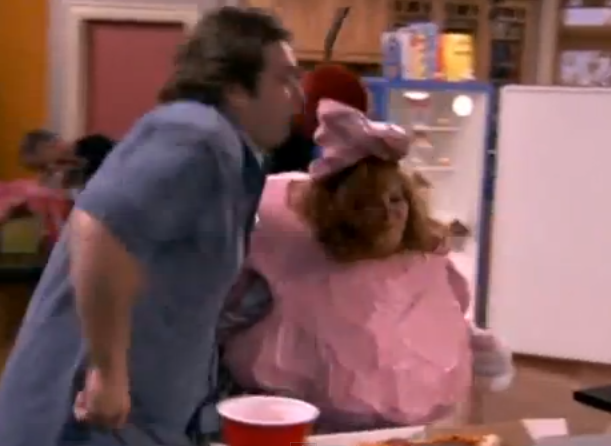
“Valerie Shines Under Stress” presents us with a world where all of Valerie’s comforts and safety nets are taken away from her. With “The Comeback” reality show premiering soon, its in her contract that she must be featured heavily in an episode of “Room and Bored,” something her arch-nemesis (and co-head writer of the sitcom) Paulie G (Lance Barber) is none-too-happy with. The writers devise a diet-pill induced dream for Valerie’s character – her character dressed as a giant cupcake must perform a big pratfall. During all this, Juna begins getting death threats and security is bumped up on set, and after Valerie beeps while walking through a metal detector she reveals that she has scoliosis and, as a result, has a large metal rod in her back.

All during this, writer Heather Morgan begins setting up the dominoes that she will knock down during the episode’s climax. “Room and Bored’s” other head writer, Tom (Robert Bagnell) has an “ulcer situation” and spends the week at home. The sitcom’s director for the week is a non-presence. Valerie insists that her husband doesn’t come to the taping. She goes to get advice from a director she trusts (James Burrows, one of the great comedic television directors of all time playing himself), who tells her that falling backward will be funnier, even though we know that will really hurt her because of the rod in her back. On taping day, the audience leaves early after a technical malfunction…the last safety net for Valerie.

All she has left is Paulie G’s emotionless stare.

In an incredibly uncomfortable sequence (purposely), Valerie falls in the cupcake suit over and over…finally falling backward, fully knowing she will be in incredible pain afterwards. Who would have ever thought a giant cupcake suit would be such a dramatic prop? After all is said and done, Paulie G insults Valerie one too many time, and Valerie punches him in the gut. Causing him to vomit. Which causes her to vomit. And, in that moment, all the tension that has been building for the entire episode comes to a beautiful, hilarious climax. Because, seriously, who doesn’t love (in the words of Jay Leno) “the rare double vomit”?

What really impressed me was how well Morgan was able to hide the script’s machinations. Every piece of the puzzle was enjoyable enough on its own that it did not seem like set-up, which is the hallmark of great writing.

The series was, in many ways, lightning in a bottle. On every level, from the writing to the cast to the direction, it worked. And that is some kind of special. Of course, “The Comeback” was never planned as a one-season wonder. Though the finale works perfectly as a series finale, when Kudrow came to speak at AFI she spoke at length about what would have happened had the series come back for a second season. Even on the DVD there are extra scenes shot that I can only imagine would have been used if the show came back. Even though I’m heartbroken HBO didn’t give the show a second chance, part of me thinks that it would be nearly impossible to top the first season. Of course, even as I write that, I know that if anyone could do it, it would be Kudrow and King. The character still remains so indelible that I can’t help but wonder where she would be today. What would Valerie Cherish be doing right now? I do wanna see that.

“Valerie Shines Under Stress” is available at HBO Go, YouTube and on DVD.

Friday, December 21, 2012

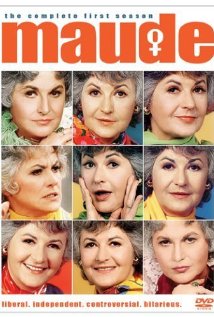
Maude - "Maude's Guilt Trip"

Season 6, Episode 1
Original Airdate: September 12, 1977
Writer: Charlie Hauck
Director: Hal Cooper
Executive Producers: Hal Cooper, Rod Parker
Cast: Bea Arthur, Bill Macy, Adrienne Barbeau, Rue McClanahan

People don’t talk much about “Maude” anymore, do they? Though well-liked throughout most of its run, in recent years its popularity has been eclipsed by the show it spun out of (“All in the Family”) and star Bea Arthur’s other iconic comedy (“The Golden Girls”). And what a shame that is, because for my money “Maude” is better * gasp! * than both of those sitcoms.

The show centers on Maude Findlay (Arthur), Liberal with a capital “L” and currently married to her fourth husband Walter (Bill Macy). While “All in the Family” mocked its bigoted hero Archie Bunker while simultaneously humanizing him through his faults, “Maude” had a more interesting trick to play: Maude considered herself one of the educated, cultural elite who was consistently faced with the foibles of everyday life, tried to rise above it, but (usually) ended up surrendering to her more base emotions. As an audience, we see parts of ourselves in Archie, sure, but I see a lot more of myself in Maude. A similar version of this would be used to huge success first with Sam in “Cheers” and later with Fraiser in his self-titled spin-off.

The show also took one hell of a lot of risks, more than probably any other in history. Even if you’ve never seen the show, you’ve probably heard about the infamous abortion episode, which unfortunately doesn’t hold up today. But there is so much more. At some point every major character abused prescription drugs. An entire episode focused on Maude trying to buy a bag of pot. Walter became an raging alcoholic who slapped Maude onscreen. Later he went bankrupt and attempted suicide. Maude struggled with what, in retrospect, appears to be bipolar disorder. In one episode Maude hired a black maid (Ester Rolle, who spun her Florida character off into “Good Times”) because she had white man’s guilt. And in a fantastic tour-de-force, Arthur performed a one-woman-show for an entire episode as her character quietly came apart at the seams in a therapy session. You simply can’t get away with stuff like this today, even though for my money sitcoms would be served well to be a lot more topical and risk-taking. Oh, and I should note that, even though the above events are really “heavy” in content, the show still managed to be really damn funny, even in its darkest moments.

“Maude’s Guilt Trip” is, for me, the high point of the entire series, and shows all its characters reacting to the “death” of a most hated relative. Everything action, reaction and line of dialogue showcases moral ambiguity taken to most hilarious extremes.

The episode begins with Maude preparing for the arrival of her loathed Aunt Tinky (“Her tea kettle doesn’t whistle, it whines”). Maude has bought her a plane ticket on a crappy puddle-jumper, but her mind is focused on wanting to take a trip to Rome. As a way to make Maude feel guilty, Tinky purchases $50,000 worth of life insurance in Maude’s name before she gets on the plane…and then the plane crashes.

Arthur’s performance throughout the episode is tremendous, a perfect balance between the meaningful words coming out of Maude’s mouth and the dollar signs spinning in her eyes. All Maude really cares about is getting the best trip to Rome possible, but she must go through the motions of seeming upset that this horrible person is dead, especially in front of her daughter (Adrienne Barbeau) and best friend Vivian (Rue McClanahan. Yes, THAT RueMcClanahan. Seriously, you should be watching this show).

Here’s a little sample of how brilliantly writer Charlie Hauck toes the line between humanity and selfishness:

Maude: “We could make (the trip to Rome) a pilgrimage in Tinky’s honor.”
Vivian: “Was she Catholic?”
Maude: “What the hell is the difference?”

Just as Maude finally makes peace with her “emotional reaction” to Tinky’s death and begins to behave normally again, Hauck pulls the rug out from under the characters in a brilliantly executed twist: Vivian’s husband Arthur (Conrad Bain) arrives with the news that there is a lone survivor who has crawled out of the rubble and is fighting for survival in the woods where the plane crashed.

The thought that Tinky might be alive becomes secondary to the thought that the trip to Rome is now in question, even though Maude tries to pretend that her priorities are just the reverse. She desperately attempts to keep the moral high ground even though there is none to stand on, and even though no one around her is really judging her. Watching Arthur spiral out of emotional control is one of the great joys in all of comedic television, and her meltdown here is one for the ages.

Then there’s yet another twist, one I’ll let you discover for yourself, since I’m pretty sure you haven’t watched the episode. It’s worth noting that this is the first episode of the show’s sixth and final season, and to see the sitcom still firing on all cylinders this late in its run is wonderful. Despite the heavy writer turnover throughout “Maude’s” run (like many sitcoms of its time), the show was consistently good, often great, and allowed its characters to learn from their mistakes and stumbles – a rarity in a genre where keeping things status quo is the norm.

All this, and yet only the first season of “Maude” is available on DVD, and there don’t appear to be any announcements of the other seasons forthcoming. Such a shame, because this show feels perhaps even more timely and button-pressing today than it did when it first aired. Arthur remains a treasure, and fans of “The Golden Girls” would adore this sitcom because the characters are so similar. Here is a show that still has something to say to modern audiences, and yet that audience is having one hell of a time finding it.

“Maude’s Guilt Trip” is only available on YouTube.

Friday, October 19, 2012

The Lucy Show – “Lucy and Viv Put in a Shower”


Season 1, Episode 18
Original Airdate: January 28, 1963
Writers: Bob Carroll Jr., Madelyn Martin, Bob Weiskoph, Bob Schiller
Director: Jack Donohue
Producer: Elliot Lewis
Cast: Lucille Ball, Vivian Vance, Jimmy Garrett, Ralph Hart

“The Lucy Show” had the unfortunate job of being Lucille Ball’s follow-up to her wildly popular, groundbreaking, classic, best-sitcom-of-all-time “I Love Lucy.” Although the show was usually good, sometimes very good, it never reached the creative heights of its predecessor, and as a result its writers and producers retooled the show numerous times over the course of its run, to the point where I’d wager that the final season is almost unrecognizable when compared to the first.

Though Lucy (Lucille Ball) and Viv (Vivian Vance) were ostensibly different characters than “Lucy” and “Ethel,” their relationship was unchanged, as was how they interacted with one another. Lucy is widowed and Viv is divorced, and the show’s writing team (including several from “I Love Lucy”) decided to give the friends constant money troubles as they try to care for their children. The inherent problem with this is that audiences have expectations of Lucy causing expensive mayhem and anarchy (buying a thousand ranch dressing bottles, destroying a Laundromat, getting three hundred eggs crushed while doing the tango), and because of the character’s limited budget things could never get really out of control. During the first season in particular, you could tell the writers were grasping to be different from “I Love Lucy” before finally just giving in and giving audiences the set-pieces they wanted, household budgets be damned. Many of these were directly pulled from “I Love Lucy,” with the bulk of “Lucy and Viv are Volunteer Firemen” taken from “Lucy Goes to the Hospital,” with the women practicing getting ready for a fire alarm and then totally panicking when an actual alarm comes. The first season finale, “Lucy Buys a Boat,” payed homage to (ripped off) Ball’s salad dance in “The Long Long Trailer” by having a boat cut loose in the middle of a storm.

And yet.

“Lucy and Viv Put In a Shower” still stands as a wonderful half-hour of television. Shockingly, the storyline centers on Lucy and Viv deciding to…wait for it…install a shower. While they first try to rope in their gentlemen-in-waiting, Lucy soon tries to finish the job herself, and somehow gets stuck in the flooding shower with Viv, to the point where the water is seven feet deep.

This set-piece is equal to anything Ball did in her career, from “Vitametavegamin” to the grape stomping to setting her nose on fire. Hell, it’s probably equal to any major set-piece from any comedy series. It’s the perfect example of sustaining tension and laughter consistently over the course of ten minutes of screen time. The women are always trapped, and the water is always rising.

But I get ahead of myself. So the girls decide to have a shower installed in their boys’ closet so that they can get some time in the bathroom, and from there the writers slowly-but-surely begin to lay groundwork for the set-piece. The door to the standing shower was installed backwards, so it would hold the water in instead of opening under pressure. Lucy had to be the one to install the faucets, and of course has no idea what a washer is. The plug in the bottom of the shower has yet to be removed. Viv breaks off the water main so the water won’t stop coming. Yes, it seems as if the writers are bending over backward to make the implausible seem plausible, but in this case it works because the payoff is so perfect.

So Lucy (wearing a shirt with a huge “LC” sewed onto it, something that had to inspire Laverne’s wardrobe years later) and Viv begin to get literally waterlogged. Another amazing thing about this sequence is that it, by its very nature, cannot be as perfectly rehearsed as the candy factory or the fashion show. That water is going to spray where it wants and you can’t help but have a few mishaps when trying to swim in what is essentially a very small seven-foot-deep pool of water. Rumors persist that Ball almost drowned during the filming and it made it on screen, but we only see Ball go under once where she didn’t mean to. She immediately resurfaces and says, “I didn’t know it was that deep,” and that’s that. It’s amazing to see Vivian Vance, not Viv, react to water spraying in her face and up her nose by screaming, “Oh, wait a minute!”

It’s also interesting to note that the writers, oddly, give Viv the best jokes and gags (pun intended) here instead of Lucy, instead deciding to let Ball just go for it with the physicality. First we get this one:
Viv: Lucy, did you pay this month’s water bill?Lucy: Sure, I did.Viv: That was a dumb thing to do!

Later, when Lucy tells Viv to try to kick through the glass so they can escape, Viv refused, stating:
“It’s not that I’m afraid of cutting myself, but the blood might draw sharks.”
The rest of the episode is cute fluff, with the girls’ interactions with their suitors before the mess sweet if forgettable. And the idea of teenage girls spending far too much time in the bathroom is something that has been recycled thousands of times since, which makes the gags at the beginning lose their power. But that scene in the shower…wow. The biggest compliment I can give it is that it felt like the very best deleted scene from “I Love Lucy” ever. It’s not that “The Lucy Show” was ever bad; it’s simply that it seemed more like a watered-down (pun intended) imitation of “I Love Lucy” than its own entity.

“Lucy and Viv Put In a Shower” is available on the first season DVD of “The Lucy Show” and on YouTube.

Wednesday, October 17, 2012

Popular - "Two Weddings and a Funeral"


Season 1, Episode 22
Original Airdate: May 18. 2000
Writer: Ryan Murphy
Director: Lev L. Spiro
Executive Producers: Ryan Murphy, Gina Matthews, Michael M. Robin, Greer Shepard
Cast: Leslie Bibb, Carly Pope, Leslie Grossman, Tammy Lynn Michaels

“Popular” was a teen drama on The WB that quickly morphed into a send-up of teen dramas on The WB. At first it seems to present viewers with all the storylines one would expect from such a show (pregnancy, addiction, losing your virginity etc.), but then twisted the telling while consistently winking and nudging the audience that the creators were in on the joke. By the time the show reached its first season finale, “Two Weddings and a Funeral,” the creators didn’t even try to be subtle about it anymore.

The episode opens with a character musing: “I love the merry month of May, except for those ridiculous sweep cliffhanger stunts they always pull on my favorite teen dramas.” She then lists every possible sweep stunt, including the wildly silly ones:
  • A Wedding
  • Pregnancy
  • Death
  • Natural Disaster
  • Appearance by a Cheesy Boy Band
  • Pretty Boy Nudie Shot
  • When Pets Attack
  • Gratuitous Musical Number

The episode then goes out of its way to include all of the above. The episode’s writer, Ryan Murphy, went out of his way to string together a seriously cuckoo-for-Cocoa-Puffs series of events for his cast to deal with in one episode, not just making the show meta, but then piling meta on top of the meta. For weeks leading up to the finale, The WB was advertising the “Popular Purge,” which was the killing off of a major character on the show. During the finale, viewers could post on the show’s message board and their opinions on who should die and why were blipped across the bottom of the screen. Of course today, with everyone tweeting and twatting their every thought, talk show hosts regularly pretending viewers’ tweets are just as valuable as experts, and networks helpfully putting some variation on “#posthowawesomeweare” at the bottom of their screen at all times, the stunt seems less impressive…but during its initial broadcast I remember giggling (yes, giggling) with delight.

The storyline…well…is a clusterfuck, and by that I mean absolutely brilliant. Let’s see if I can keep it straight. On Sophomore Skip Day, wicked chemistry teacher Bobbi Glass (Diane Delano) sends her class’ photos to every hangout in the city so they will be arrested for truancy if they show up. To get her back, they lace her milkshake with e. coli. She doesn’t drink it, but seconds later becomes paralyzed by her twin sister, Nurse Jessie Glass (Delano again), who wants to kill her after making her suffer through being eaten alive by her cats, then frame the kids. All the while, Brooke (Leslie Bibb) and Sam (Carly Pope) frantically try to keep everything under control while they prepare for the wedding of their parents. Oh, and Mary Cherry’s (Leslie Grossman) mother Cherry Cherry (Delta Burke) will be marrying Erik Estrada (not kidding) at the same ceremony. Oh, and because of eating too much dirt, Mae Tuna (Mandy Freund) needs a heart valve transplant or she’ll die. Oh, and there is a voodoo witch doctor. Oh, and Brooke and Josh (Bryce Johnson) might be getting back together. At one point Sam tells Brooke:
“You guys are hilarious. You’re like the typical TV show couple who breaks up, gets back together, breaks up and gets back together one last time on the last show simply for promotional sweets purposes.”
The amazing thing is, during all this madness, Ryan never loses track of his ensemble. More than that, he uses them quite well. In an age when most network shows are populated by interchangeable babes and hunks saying interchangeable dialogue on interchangeable sets, every main character her has a point-of-view. There are several big sequences that involve the almost the entire ensemble arguing and babbling over one another, and I couldn’t help but grin because, in each scene, each character comes to the situation from his or her own perspective. Nicole Julian (Tammy Lynn Michaels) just wants to get out of the situation, even if it means framing Sam. Sweet Lily (Tamara Mello) immediately feels horrible about the group’s actions and turns the murder plot into a moment to preach about teachers being underappreciated in our society. And lunkhead Josh is just thinking about what to write in Brooke’s yearbook.

And then there’s Mary Cherry. Introduced as a popular Southern belle supporting character, Mary Cherry (she’s never called just Mary) proceeded to take over the “Popular,” with Grossman’s incredible humor and comedic timing something Murphy and his writers seemed to love tapping into. She had webbed hands and feet. She had a surprise twin sister named B. Ho. She carries around a vial of e. coli virus in her purse because, “A girl never knows when she’ll have to lose the odd fifty pounds.”

And then there’s the dialogue. This episode has more one-liners that actually land than any given episode of your traditional sitcom. When Nicole Julian arrives at Brooke’s home carrying Ms. Glass’ stray finger, she says:
“Mary Cherry, put the finger in the fridge. Bring me a Diet Coke.”
When Ms. Glass is threatening her students she boasts that:
“After a nuclear apocalypse, I’ll be the only thing standing other than the cockroaches and Cher.”
Though the second season of the show had many sterling episodes (most notably “The Brain Game” and “Baby, Don’t Do It”) it was obvious that The WB heads didn’t like being poked fun at and put pressure on the writers to normalize with traditional teen soap storylines sans the added twists. Harrison got cancer. Lily and Josh got married and cried way too much. The balance felt…off.

And yet “Popular” was still better than almost every other teen drama on television, and certainly better than most of the sitcoms. It remains a touchtone for me and is one of the reasons I wanted to become a television writer. The balance of humanity, humor and meta-commentary on the television industry found in this episode has never been equaled or surpassed by any show before or since. Plus, did I mention Mary Cherry rocks?

“Two Weddings and a Funeral” is available on the first season DVD of “Popular” and on YouTube.

Wednesday, October 3, 2012

The Dick Van Dyke Show - "The Curious Thing About Women"


Season 1, Episode 16
Original Airdate: January 10, 1962
Writer: David Adler
Director: John Rich
Executive Producers: Ronald Jacobs, Sheldon Leonard, Carl Reiner, Danny Thomas
Cast: Dick Van Dyke, Mary Tyler Moore, Rose Marie, Morey Amsterdam

The wonderful thing about “The Dick Van Dyke” show is that it never seems to push its audience. Almost every other sitcom seems to shove into its punchlines and gags, but this show operates at an even pace. The characters say funny things to one another, but there never seems to be an exclamation point at the end of their sentences to lead into audience laughter. The characters have big personalities but never go over the top like every other sitcom from that era, from “I Love Lucy” to “Leave it to Beaver.” It all feels…well…real. Like we are actually watching an American family going through their trials and tribulations, which makes the climax to “The Curious Thing About Women” one of the definitive moments in all of television comedy.

 The episode concerns a quick marital spat between Rob (Dick Van Dyke) and his wife Laura (Mary Tyler Moore) after she keeps opening his mail without his permission. Rob turns the spat into a sketch for “The Alan Brady Show” where a caricature of Laura (who shares her name) receives a box addressed to her husband and can’t stop herself from opening it…only to discover there is an inflatable raft inside. Laura is teased by all her friends about the sketch and yells at Rob, only to discover a suspicious box in the mail the next day addressed to him.

It’s interesting to note that most sitcoms follow the classic two-act structure. Lucy wants to be on television (1) and then she gets drunk while practicing the commercial she has been cast in (2). Mary admonishes people for laughing about Chuckles’ death (1) and then laughs at his funeral (2). Michael is encouraged to set up a “diversity day” at the office (1) and ends up being extremely racist (2). But “The Dick Van Dyke” show is different. In almost every episode, it follows a three-act structure instead. Here, you have Rob writing the sketch as Act One, Laura melting down as Act Two and the mysterious package as Act Three. This structure allows the show to have a faster pace than most sitcoms and, as a result, throw in some twists and turns on the way to the climax…

…which, of course, is Laura verses the box. The episode’s writer, David Adler, is brilliant in the way he sets this moment up because we have already heard a variation on this routine twice. Incredibly, the moment is much funnier because of its long set-up, not watered-down because of its repetition. When we first heard Rob pitching out the story he talks about how the box is almost magnetic to the wife -- a bit we see come to life with Laura when she exits the living room and then we see the swinging door swing fully just once before Laura reenters to stare at the box again. When Laura is actually watching the skit with her neighbors, they mention that the female is using her teeth to desperately pull open the box, and later that’s exactly what Laura does. The familiarity of the details make it so much more funny, especially considering the high horse Laura put herself on only moments before.

Also of note is the fact that Adler has made us wait almost twenty minutes for this moment, circling back to it and, in some ways, pounding us over the head that it’s coming, but only to underline how much we’ll enjoy it when it actually gets here. A lesser writer (and most modern sitcoms) would try to put some kind of twist on Mary opening the box, but Adler was smart to just give us the payoff we were expecting in the way we were expecting it. It makes the laughter more genuine because it doesn’t feel like a cheat.

Aside from the three-act structure, “The Dick Van Dyke Show” was quick and eager to embrace (at the time) daring storytelling techniques. It was quick to use frame stories, or create stories within stories if it served the characters and humor well. This was a much more adult show than most other comedies on television and the writers trusted that the viewers would be able to follow along when they tried something a little different or took the story in a surprising direction. It was also very successful at being both a work sitcom and a family sitcom. Other shows, most notably “The Mary Tyler Moore Show,” tried the same juggling act before finally giving in and becoming one or the other. “The Dick Van Dyke” show, on the other hand, always kept the balance and, as a result, some of its best comedy came when the two world collided in twisted, uncomfortable ways. Look at this episode or when Laura accidentally lets it slip that Rob’s boss is actually bald.

Anchoring everything is Van Dyke and Moore, who share an easy, charming chemistry with one another that is never more evident than when they are arguing. Their speaking patterns and delivery allows them to deliver long mouthfuls of sentences from the script, and the fact that they are both tall and lanky results in some create physical comedy throughout the episode, first with Rob pretending to be Laura and later when Laura is fighting with the box. More than that, they never seem like anything less than smart, intelligent people, a trap so many great sitcoms fall into regularly by dumbing down their characters.

Though I only laughed once during “The Curious Thing About Women,” it was a long and fulfilling belly laugh that had been building the entire episode. And the rest of the time I was smiling widely. “The Dick Van Dyke Show” isn’t classic television because of its punchlines, but because it’s smart enough to know that punchlines are only part of what makes a great comedy.

“The Curious Thing About Women” is available on the first season DVD of “The Dick Van Dyke Show,” on iTunes, Hulu and Amazon Prime.

Wednesday, September 19, 2012

Friends – “The One With the Embryos”


Season 4, Episode 12
Original Airdate: January 15. 1998
Writers: Jill Condon & Amy Toomin
Director: Kevin S. Bright
Executive Producers: Kevin S. Bright, Marta Kauffman, David Crane
Cast: Jennifer Aniston, Courtney Cox, Lisa Kudrow

Over the decades, the “Game Show” episode has become a touchtone for most long-running comedies. It provides viewers with a chance to see their favorite characters behave surprisingly under immense pressure without there being any real stakes, and often the results are memorable fan favorites. There’s “The Odd Couple” episode entitled “Password,” “The Game Show” on “Maude,” “The Brain Game” on “Popular,” and “Grab That Dough” on “The Golden Girls,” to name a few. But the best version of this chestnut is by far “The One With the Embryos” from “Friends’” fourth season.

After Chandler (Matthew Perry) and Joey (Matt LeBlanc) guess every item in Rachel’s (Jennifer Aniston) shopping bag, Rachel and Monica (Courtney Cox) challenge them to a game of “Who Knows Who Better?” This example of the “Game Show” formula transcends the others for several reasons. First, it keeps the game intimate by having it be, essentially, a variation on “Jeopardy” done by the characters in their home instead of injecting the gloss of an actual game show set. Second, the episode concerns trivia about the characters instead of random facts the viewer has no attachment to. Finally, the storyline blossoms into having legitimate, real stakes (Monica and Rachel must swap apartments with the guys) instead of vague cash prizes that you know they won’t win.

More than that, this episode came at the right moment in the series. The viewers knew the gang enough that the writers, Jill Condon and Amy Toomin, could throw in some sly in-jokes (hey, what is Chandler Bing’s job?) while creating bits of trivia that serve as more than punchlines – they feel like natural extensions of our characters that we just didn’t know about yet.

"Noooo...!"
As with other “Game Show” episodes, watching the characters suffer through immense pressure under the guise of a game is fantastic for the viewer and allowed the actors to do some fascinating things with their characters. Look at the way the group repeatedly becomes exasperated with Ross’ (David Schwimmer) impression of a Game Show host, or Aniston’s awesome reading of the simple line “Ooh, that’s interesting.” However, nothing beats Monica’s completely (purposely) over-the-top shriek of “Nooooo…!” when she loses the game.

Also interesting is how the studio audience feeds off of the energy of the game as if it is a real Game Show. There is applause at the end of every round, and the laughter becomes more gleeful as the game evolves. It’s one of those rare episodes where the audience’s laughter almost morphs into a character – the same way the audience did during “I Love Lucy’s” infamous egg tango.

If all that wasn’t enough, what makes the episode transcendent is the B-story, involving the embryos of the title. Phoebe (Lisa Kudrow) has agreed to be a surrogate for her brother and sister-in-law (Giovanni Ribisi and Debra Jo Rupp), and here we follow the implantation of the eggs and the eventual reveal that Phoebe is, indeed, pregnant. What gives the arc some dramatic weight is that this is the only chance they’ll have at trying surrogacy, because all their savings is tied into those eggs (“They are literally putting all their eggs into my basket,” Phoebe opines). Phoebe was always a close cousin of Katherine Hepburn’s character in “Bringing Up Baby,” and here Kudrow gives us some of the best work of her career. There’s a beautiful scene where she’s speaking to the embryos that are about to be implanted. Her speech is some of the best writing in the history of the show, perfectly balancing the sentimental with the laughs:

“Hello tiny embryos. I’m Phoebe Buffay. Hi. I’m hoping to be your uterus for the next nine months. You should know that we’re doing this for Frank and Alice – who you know. You’ve been there. You know, they want you so much, so when you get in there really grab on. Okay? And I promise that I’ll keep you safe and warm until you’re ready to have them take you home. Oh! Also, next time you see me, if I’m screaming, don’t worry, that’s what is supposed to happen.”

There isn’t a joke in the monologue that feels forced, and nothing feels like a punchline. Kudrow’s delivery gives the awesome writing another level of humor and heart. At this point most viewers have seen the series and know there will be that heartbreaking scene in the one-hundredth episode where Phoebe is holding the triplets after giving birth and must give them away, which gives this entire episode a beautiful, bittersweet quality.

The episode also features one of the very best lines in the history of the series. After Phoebe takes a pregnancy test and it’s positive, her brother proudly screams at the top of his lungs: “My sister's gonna have my baby!”


There isn’t a wasted moment in “The One With the Embryos,” and the writers ensure that the aftermath of the game is just as enjoyable as the build-up. At once heartfelt and genuinely funny, this episode underlined what set “Friends” apart from the hundreds of sitcoms that have tried to rip off its formula and characters in the years since its broadcast. Instead of being happy with just taking classic sitcom scenarios and doing a good version of them, the “Friends” writers twisted and toyed with the clichés until they were new and innovative again. It’s also a show that never shied away from taking storytelling risks that could have alienated the core fanbase (pairing Monica and Chandler, turning Ross and Rachel into a triangle with Joey), but because the writers stayed true to their characters (quirks, issues, faults and everything in between) they not only made it work, but made it work wonderfully.

“The One With the Embryos” is available on iTunes, on DVD, on Amazon Instant Video and is probably showing on some channel on your television right now.