Showing posts with label Frasier. Show all posts

Monday, February 11, 2013

Arrested Development - "Meat the Veals"


Season 2, Episode 16
Original Airdate: April 3, 2005
Writers: Richard Rosenstock, Barbie Adler
Director: Joe Russo
Executive Producers: Brian Grazer, Ron Howard, Mitchell Hurwitz, David Nevins
Cast: Jason Bateman, Portia de Rossi, Will Arnett, Tony Hale

Telling a single funny joke is infinitely more difficult than telling a single unfunny one, and filling 22 minutes with funny jokes is nearly impossible, no matter what a laughing studio audience would have you believe. “Meat the Veals” is as close to a perfect comedic episode of television I’ve ever seen. Every single joke is funny, and every time I watch the episode I am as entertained as I was the first time. And yes, I write this fully acknowledging that the title is horrible. For me, it’s the pinnacle of “Arrested Development,” a show with many creative peaks.

Plus, there’s Mrs. Featherbottom.

Plus, we’re introduced to Franklin the puppet.

Though now it seems like everyone knows and loves the show (and likes to boast that they watched it when it was originally on air. As if.), the series was an underground movement from the start…the type of program that four hipsters in Brooklyn watched but were afraid to tell others about because it would mean admitting they had a television. Even I, the guy who watched all three episodes of “The Return of Jezebel James,” didn’t start watching until the beginning of the second season. And, truthfully, it’s easy to see why its many eccentricities turned off new viewers. Instead of self-contained, simple A-and-B stories, any given episode had about ten continuing storylines going on. Instead of giving viewers easy jumping-on points for prospective viewers, it filled its half-hours with dozens of in-jokes new viewers would not understand. This craziness is what makes the show great, of course – and are a huge reason why it has flourished on DVD and Netflix (where viewers can watch from episode one and not miss a beat). But for the show’s original audience, the inside-baseball gags were just another reason we loved it. It was like we were part of an elite club that most of the world was not privy to.

Of course being part of a small, elite club watching a broadcast sitcom doesn’t guarantee it’ll have a long and successful run, but that’s beside the point.

The main story of “Meat the Veals” (let me reiterate how much better the episode is than its name suggests) involves George Michael (Michael Cera), to his father Michael’s (Jason Bateman) chagrin, wanting to get pre-engaged to his girlfriend Anne (Mae Whitman). Meanwhile, Oscar (Jeffrey Tambor) wants to throw an anniversary party for his missing twin brother (Tambor again) and Lucille (Jessica Walter). Meanwhile, Tobias (David Cross) has been thrown out of the house by Lindsay (Portia de Rossi) and, in order to see his daughter Maeby (Alia Shawkat), dons the persona of a British housekeeper named Mrs. Featherbottom. Meanwhile, Maeby tries to keep her dual life as a studio exec hidden from her family. Meanwhile, GOB (Will Arnett) wants to re-introduce the family to Franklin, a racist black puppet that mocks George Michael’s “cracker ass,” among other non-bleeped things. Like I said, it’s a little complex for a half-hour sitcom. But then again, half the fun is watching the multiple storylines crash into one another in ways much cooler than “Crash.”

Like I wrote, every single joke lands. Also, this happens, which is my favorite bit of physical television comedy in the past decade. I can’t watch the episode without rewinding Mrs. Featherbottom’s fall multiple times. It’s difficult to pick a favorite bit of dialogue…maybe this one?

Lindsay (re: Mrs. Featherbottom): “You do realize that’s Tobias, right?”Lucille: “If he’s going to get into my closet, he’s going to work for it.”
Or this one?
Mrs. Featherbottom: “Who’s up for a banger in the mouth?”
I’d mention more, but then I’d just start listing, which is only fun if it involves Roger Ebert quotes.

What struck me during this viewing is how varied the actors’ different styles of comedy are. In series like “Fraiser,” and “The Dick Van Dyke Show,” every actor seems to be hitting the same comedic notes in any given episode. Often when a different comedic style is introduced on sitcoms, a’la Urkel on “Family Matters” or Fonzie in “Happy Days,” they tend to take over the show and shift the comedy to their strengths. I don’t write that as a criticism of those shows, just an observation in order to underline how special it is that “Arrested Development” can marry all those brands of humor into one cohesive whole. Cera’s quiet, awkward humor couldn’t be further removed from Cross’ broad slapstick, and yet when they are in the same room together, it feels right.

This leads me to the question of whether this is the best comedic ensemble in television history. Surely the casts of shows like “I Love Lucy,” “Seinfeld” and “The Mary Tyler Moore Show” were, in their own ways, perfect…but this cast is also perfect. And bigger. And while those sitcoms ostensibly had the title star at their center, here there is no true lead. Yes, Michael is our way into the show, but in many ways he’s just as demented as the rest of his family (it’s just not as obvious) – and just because you play the straight man in a comedy sketch does not mean you are central to it. So yeah, as to the question posed above, I’ll call this troupe the once-in-a-lifetime, lightning-in-a-bottle, other-clichĂ©-chesnut, best cast in the history of television.

And I’m so happy that “Arrested Development” has crossed over garnered the popularity it always deserved. I remember being in college when I discovered it, and putting on DVDs of the first season for my friends while we were eating Papa Johns and whipped ice cream. In a way, helping others discover the program and the greatness contained therein was part of the fun – like handing a great novel to someone and whispering “you’ll thank me later.”

“Meat the Veals” is available on DVD, Netflix, Amazon Prime, iTunes and Hulu. And now, seven years after the show was cancelled midseason by Fox, it has been revived by Netflix. The fourth season will be available in May.

Friday, December 21, 2012

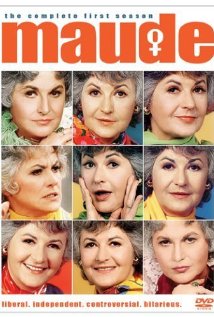
Maude - "Maude's Guilt Trip"

Season 6, Episode 1
Original Airdate: September 12, 1977
Writer: Charlie Hauck
Director: Hal Cooper
Executive Producers: Hal Cooper, Rod Parker
Cast: Bea Arthur, Bill Macy, Adrienne Barbeau, Rue McClanahan

People don’t talk much about “Maude” anymore, do they? Though well-liked throughout most of its run, in recent years its popularity has been eclipsed by the show it spun out of (“All in the Family”) and star Bea Arthur’s other iconic comedy (“The Golden Girls”). And what a shame that is, because for my money “Maude” is better * gasp! * than both of those sitcoms.

The show centers on Maude Findlay (Arthur), Liberal with a capital “L” and currently married to her fourth husband Walter (Bill Macy). While “All in the Family” mocked its bigoted hero Archie Bunker while simultaneously humanizing him through his faults, “Maude” had a more interesting trick to play: Maude considered herself one of the educated, cultural elite who was consistently faced with the foibles of everyday life, tried to rise above it, but (usually) ended up surrendering to her more base emotions. As an audience, we see parts of ourselves in Archie, sure, but I see a lot more of myself in Maude. A similar version of this would be used to huge success first with Sam in “Cheers” and later with Fraiser in his self-titled spin-off.

The show also took one hell of a lot of risks, more than probably any other in history. Even if you’ve never seen the show, you’ve probably heard about the infamous abortion episode, which unfortunately doesn’t hold up today. But there is so much more. At some point every major character abused prescription drugs. An entire episode focused on Maude trying to buy a bag of pot. Walter became an raging alcoholic who slapped Maude onscreen. Later he went bankrupt and attempted suicide. Maude struggled with what, in retrospect, appears to be bipolar disorder. In one episode Maude hired a black maid (Ester Rolle, who spun her Florida character off into “Good Times”) because she had white man’s guilt. And in a fantastic tour-de-force, Arthur performed a one-woman-show for an entire episode as her character quietly came apart at the seams in a therapy session. You simply can’t get away with stuff like this today, even though for my money sitcoms would be served well to be a lot more topical and risk-taking. Oh, and I should note that, even though the above events are really “heavy” in content, the show still managed to be really damn funny, even in its darkest moments.

“Maude’s Guilt Trip” is, for me, the high point of the entire series, and shows all its characters reacting to the “death” of a most hated relative. Everything action, reaction and line of dialogue showcases moral ambiguity taken to most hilarious extremes.

The episode begins with Maude preparing for the arrival of her loathed Aunt Tinky (“Her tea kettle doesn’t whistle, it whines”). Maude has bought her a plane ticket on a crappy puddle-jumper, but her mind is focused on wanting to take a trip to Rome. As a way to make Maude feel guilty, Tinky purchases $50,000 worth of life insurance in Maude’s name before she gets on the plane…and then the plane crashes.

Arthur’s performance throughout the episode is tremendous, a perfect balance between the meaningful words coming out of Maude’s mouth and the dollar signs spinning in her eyes. All Maude really cares about is getting the best trip to Rome possible, but she must go through the motions of seeming upset that this horrible person is dead, especially in front of her daughter (Adrienne Barbeau) and best friend Vivian (Rue McClanahan. Yes, THAT RueMcClanahan. Seriously, you should be watching this show).

Here’s a little sample of how brilliantly writer Charlie Hauck toes the line between humanity and selfishness:

Maude: “We could make (the trip to Rome) a pilgrimage in Tinky’s honor.”
Vivian: “Was she Catholic?”
Maude: “What the hell is the difference?”

Just as Maude finally makes peace with her “emotional reaction” to Tinky’s death and begins to behave normally again, Hauck pulls the rug out from under the characters in a brilliantly executed twist: Vivian’s husband Arthur (Conrad Bain) arrives with the news that there is a lone survivor who has crawled out of the rubble and is fighting for survival in the woods where the plane crashed.

The thought that Tinky might be alive becomes secondary to the thought that the trip to Rome is now in question, even though Maude tries to pretend that her priorities are just the reverse. She desperately attempts to keep the moral high ground even though there is none to stand on, and even though no one around her is really judging her. Watching Arthur spiral out of emotional control is one of the great joys in all of comedic television, and her meltdown here is one for the ages.

Then there’s yet another twist, one I’ll let you discover for yourself, since I’m pretty sure you haven’t watched the episode. It’s worth noting that this is the first episode of the show’s sixth and final season, and to see the sitcom still firing on all cylinders this late in its run is wonderful. Despite the heavy writer turnover throughout “Maude’s” run (like many sitcoms of its time), the show was consistently good, often great, and allowed its characters to learn from their mistakes and stumbles – a rarity in a genre where keeping things status quo is the norm.

All this, and yet only the first season of “Maude” is available on DVD, and there don’t appear to be any announcements of the other seasons forthcoming. Such a shame, because this show feels perhaps even more timely and button-pressing today than it did when it first aired. Arthur remains a treasure, and fans of “The Golden Girls” would adore this sitcom because the characters are so similar. Here is a show that still has something to say to modern audiences, and yet that audience is having one hell of a time finding it.

“Maude’s Guilt Trip” is only available on YouTube.

Monday, July 16, 2012

Frasier : "The Innkeepers"

Season Two, Episode 23
Original Airdate: May 16, 1995
Writer: David Lloyd
Director: James Burrows
Executive Producers: David Angell, Peter Casey, Kelsey Grammer, David Lee, Christopher Lloyd
Cast: Kelsey Grammer, Jane Leeves, David Hyde Pierce, Peri Gilpin, John Mahoney

“The Innkeepers” is a classic example of a slow-burn sitcom episode, but transcends most others because its mechanics are so well-hidden. In many respects, the viewer doesn’t even know he is being set up for the explosive finale until the payoffs actually happen. This is because the clues are so well-hidden and because they are all draped in humor that actually works. In “The Wizard of Oz,” one of the classic lines is “Pay no attention to the man behind the curtain!” Here, we don’t see the man or the curtain because we are having too much fun watching the show.

The premise couldn’t be simpler: Frasier (Kelsey Grammer) and Niles (David Hyde Pierce) decide to buy a restaurant. Their father (John Mahoney) tells them it’s going to wrong, and they don’t listen. Chaos ensues. If the idea of the brothers doing this sounds a little farfetched, the show’s writer David Lloyd must have known this, and spends an entire act making the purchase a realistic venture. After learning Orsini’s Restaurant is closing, the Niles waxes lyrical about how he had happy childhood memories there, and they decide to make one more family trip, complete with Daphne (Jane Leeves), to reminisce. They use logic to convince themselves to buy – after all, the eatery is in a prime location, and a head chef at a rival restaurant is unhappy there, etc. One could almost be convinced that this is a good venture (Frasier: “I’ve always wanted to own a four-star restaurant.” Niles: “What growing boy hasn’t?”), though Martin gets a few great zingers in before the deal is done.

We shift to opening night, and that’s where the show hits its stride. “Frasier” never talked down to its audience, though its characters often found themselves talking down to those they encountered, and here Lloyd ensured that every calamity felt natural and understandable, given the circumstances. After all, can you really blame Frasier and Niles for not knowing which swinging door is “in” and which one is “out”? And instead of allowing the situation to dovetail into some sort of rivalry between the brothers, which would have been so easy and done by most lesser sitcoms, there’s only one small beat where Frasier insists on a large soufflĂ© dish and Niles wants small, individual ones.

Now for the build-up to the explosive payoffs. In every scripted film or television show worth its salt, writers plant small hints as to what’s coming early in the episode so that when the payoff happens, it makes sense logically. Look at twist in “The Sixth Sense” as a perfect example of a dozen clues hidden logically in plain sight that take on resonance when the finale happens. Here, the set-ups are disguised well because they are in the form of jokes, and they all land, making you think that’s the end of it. The character of Otto is set up as a probably-senile waiter in the restaurant, and when Frasier and Niles take it over, they turn him into a valet because they don’t want to let him go. Frasier carries around a walkie to call down to Otto and have him drive the valet cars to the entrance, and every time he calls back “Who is this!?” We think that’s the punchline, and the fact that it recurs makes it even funnier because Frasier gets more and more desperate every time he speaks to Otto. It is never, ever, ever, ever implied that Otto should not be behind the wheel of a car. If that were even hinted at in a line, the twist of climaxing the episode by having Otto drive a car through the wall would have been spoiled. It’s funniest sitcom car crash in history, rivaled only by this one from “Everybody Loves Raymond.” And yet, as the car goes through that wall, it makes complete logical sense and is all the funnier because it is genuinely surprising.

The pacing of the episode is brisk and the director, James Burrows, pulls off some intricate, complicated choreography with the characters and storylines. It all looks so easy, but at one point he is juggling Martin at the bar, Frasier seating people, Roz and her date and Niles and Daphne self-destructing in the kitchen all at once. Burrows has won 10 Emmys over the course of his career, and is it any wonder? With the possible exception of William Asher, this man has given us more indelible comic television images than any other, hands down. Looking down a list of his credits is like looking through a slice of television history: “The Mary Tyler Moore Show,” “Rhoda,” “Taxi,” “Cheers,” “NewsRadio,” Friends,” “Will & Grace” … and those shows are just scratching the surface.

The episode is also notable because it is a true ensemble act. No character is the main focus, but each one gets one of the major climactic pay-offs. The restaurant goes into a brown-out when Niles drops a toaster into the eel aquarium. Daphne grabs an eel by the tail and smashes it on the counter. Roz explodes the cherries jubilee. And Frasier facilitates (and watches in horror during) the aforementioned car crash. Any one of these moments is good enough to make the episode memorable, but together they make it great television.

“The Innkeepers” is available on the second season DVD of “Frasier,” Amazon Prime, Hulu Plus (ugh), iTunes and Youtube.